

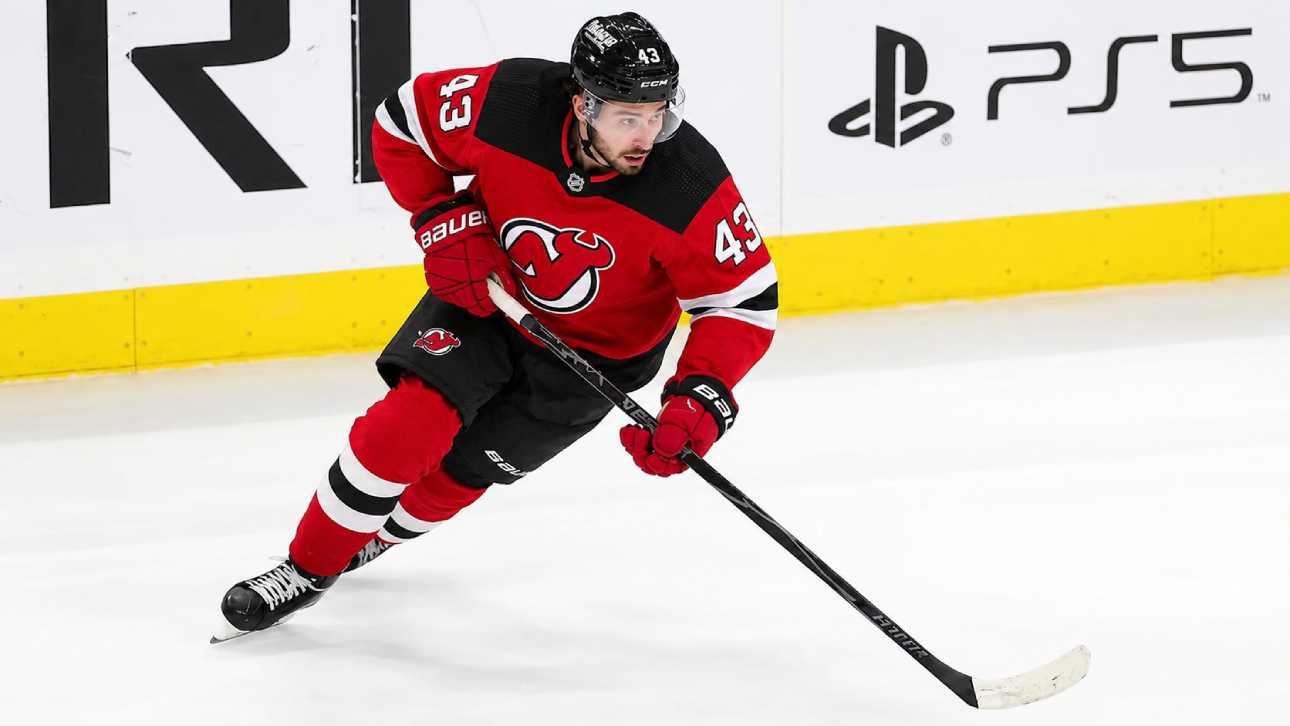
The Minnesota Wild are not at the point where they need to trade Quinn Hughes, but for the first time this summer, I think it is reasonable to start identifying exactly where that point is.
That distinction matters.
Minnesota acquired Hughes to win a Stanley Cup, not flip him eight months later. He rewarded that gamble with an incredible 53 points in 48 games with the Wild, followed by 15 points in 11 playoff games while averaging 30:57 per night in the postseason. The Wild gave Vancouver Marco Rossi, Zeev Buium, Liam Ohgren and a 2026 first-round pick to get him. Walking away from Hughes was never Plan A.
But Hughes is now entering the final year of his contract with a $7.85 million cap hit and can become an unrestricted free agent on July 1, 2027. Minnesota has had the ability to extend him since July 1, negotiations have taken place, and no contract has been announced. Meanwhile, the New Jersey Devils remain the obvious organization looming over the entire situation.
That doesn’t mean a trade is coming.
It does mean Minnesota’s clock has started.
Why Quinn Hughes’ Contract Could Push the Minnesota Wild Toward a Trade
There are important reasons Wild fans should not panic yet.
Hughes said after Minnesota’s playoff elimination that he was “open to re-signing” and spoke positively about the organization, roster and direction of the franchise. Wild owner Craig Leipold went even further in June, publicly declaring, “We are going to re-sign him.”
Bill Guerin subsequently traveled to Michigan for contract discussions with Hughes. That means an earlier report that Guerin was preparing to meet Hughes’ camp did materialize: the Minnesota Star Tribune reported on August 5 that Guerin had made the trip and negotiations were continuing.
So this isn’t a situation where Hughes has refused to negotiate.
That is critical.
Still, August is disappearing.
Elliotte Friedman has publicly predicted a three-year contract worth around $18 million annually and said he would begin worrying if the deal were not completed by the start of the season.
That’s approximately where my own concern line sits as well.
If training camp arrives without a deal, I’m watching.
If opening night arrives without one, I’m concerned.
If Minnesota reaches the middle of the season without meaningful progress, Guerin has to start investigating the trade market whether he wants to or not.
Because once you get close enough to July 1, 2027, Hughes controls everything.
Quinn Hughes Career NHL Stats

Quinn Hughes
Type GP G A P +/- Regular Season 510 67 422 489 +29 Playoffs 41 6 35 41 +9

The salary cap isn’t Minnesota’s biggest problem
Interestingly, Minnesota doesn’t appear to need to move Hughes because of the salary cap.
PuckPedia currently projects the Wild to have approximately $45.98 million of 2027-28 cap space, although only 11 active-roster players are projected under contract. If Hughes signed for $18 million, Minnesota would still have roughly $27.98 million available before filling the remainder of its roster.
So my read is simple:
This isn’t primarily about whether Minnesota can afford Quinn Hughes. It’s about whether Quinn Hughes wants to commit enough years to Minnesota for the Wild to protect the massive investment they already made.
And that’s exactly why New Jersey won’t disappear.
The New Jersey Devils Still Have the Hughes Advantage
The Hughes brothers storyline isn’t something invented this summer.
Before Vancouver traded Quinn, former Canucks president Jim Rutherford publicly acknowledged the possibility that Hughes could eventually want to play with Jack and Luke. Minnesota ultimately beat New Jersey to him in December 2025.
Now the question becomes whether the Devils eventually get another opportunity.
New Jersey Hockey Now reported earlier this month that one source described the possibility as “It’s not over.”
I would not interpret that as evidence that Minnesota and New Jersey are currently negotiating a Hughes trade. There is no sufficiently authoritative public reporting establishing that.
What it tells us is that the Devils shouldn’t be dismissed while Hughes remains unsigned.
New Jersey also has ammunition. PuckPedia shows the Devils holding two first-round selections in 2027 and two more in 2028, while NHL.com recently ranked 6-foot-7 defenseman Anton Silayev as the organization’s No. 1 prospect.
What a Quinn Hughes Trade to the New Jersey Devils Could Cost
Here’s where I’ll separate reporting from my own analysis.
The following package is my hypothetical NHLTradeRumor.com trade-value model. It has not been reported as an offer by either team.
If Minnesota were ever forced to move Hughes, I wouldn’t accept a collection of middling pieces simply because he was approaching unrestricted free agency.
I’d start somewhere around:
New Jersey receives:
Quinn Hughes
Minnesota receives:
Dawson Mercer
Anton Silayev
2027 first-round pick
Conditional 2028 first-round pick
The 2028 selection could be upgraded to a first if Hughes signs an extension with New Jersey.
Would New Jersey want to pay that much? Probably not.
That’s exactly why I’d start there.
Minnesota surrendered Rossi, Buium, Ohgren and a first-round pick only months ago. Guerin cannot turn around and sell Hughes at fifty cents on the dollar simply because New Jersey provides the most romantic storyline.
There’s also an interesting cap wrinkle.
Mercer carries a $4 million cap hit and Silayev approximately $1.075 million. Moving those two while acquiring Hughes’ $7.85 million contract would increase New Jersey’s projected cap commitment by roughly $2.775 million. With approximately $3.85 million in projected current space, that theoretical framework can fit financially before accounting for subsequent roster moves.
That doesn’t make the trade likely.
It shows that a Devils trade isn’t impossible simply because of the salary cap.
My Quinn Hughes Trade Pressure Index
Right now, I put the situation at 68/100, worth monitoring closely, but nowhere near a trade prediction.
The lack of an extension raises the number. His UFA leverage raises it further. The Devils connection and New Jersey’s assets matter.
But Hughes saying he is open to staying, Minnesota’s financial ability to pay him and ownership’s confidence in retaining him all push the number back down.
My view could change quickly.
If Quinn Hughes is still unsigned when the 2026-27 regular season begins, I’d move that pressure index into the high 70s.
That’s when this stops being a slow August contract story and starts becoming one of the biggest NHL trade rumors of the season.
The Minnesota Wild did not pay a franchise-changing price for Hughes just to trade him again. But they also can’t allow one of hockey’s most valuable assets to walk into unrestricted free agency for nothing.
Eventually, Guerin may have to choose between the player he desperately wants to keep and the massive return he cannot afford to lose.
And every week without a contract brings Minnesota slightly closer to that decision.
Follow the Latest Minnesota Wild News and Trade Rumors
Stay up to date on the latest Minnesota Wild news, NHL trade rumors, contract updates and roster moves as the season unfolds. NHLTradeRumor.com tracks the speculation, trade chatter and developing stories that could impact the Wild lineup. While you’re here, join our NHL Fantasy Hockey Pool to test your GM skills against other hockey fans and compete for ultimate bragging rights. Looking for what channel the MN Wild game is on TV today? Visit our Minnesota Wild TV schedule for game times, broadcast information and where to watch. Bookmark NHLTradeRumor.com and sign up for our newsletter below to get the biggest NHL trade rumors and news delivered directly to you.
Enjoying our trade coverage? Add us as a preferred source on Google to catch breaking rumors first.






Every speculation regarding the Hughes bothers uniting has them landing in New Jersey. Why can’t it happen the other way around with Jack and Luke going to Minnesota. No one ever proposes that deal, so I will.
How about Jack and Luke for Kaprisov and Gustavsson?
New Jersey could use a goaltender.
The brothers can raise a family in the ‘State of Hockey’.
And I think Quinn’s new contract will quickly come together