

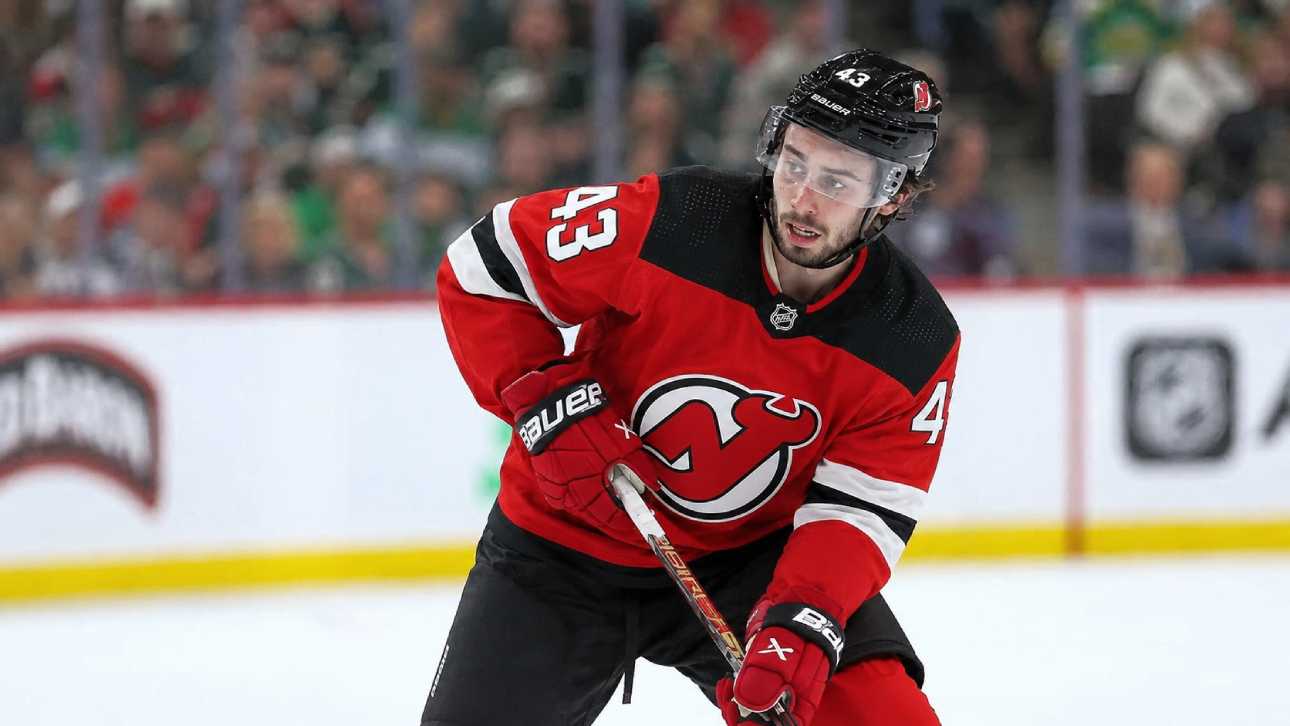
The possibility of Quinn Hughes signing with the New Jersey Devils is no longer just a fantasy created by fans hoping to see all three Hughes brothers on the same NHL team. It is a legitimate future scenario, but there remains an important distinction between something being possible and something being likely.
There is currently no indication that Hughes has decided to leave the Minnesota Wild, and there is no confirmed report that he plans to sign with New Jersey. The concern for Minnesota is the calendar.
Hughes is entering the final season of his contract and can become an unrestricted free agent on July 1, 2027. Wild general manager Bill Guerin says negotiations with Hughes and his representatives are ongoing, but every week that passes without a deal gives the Devils more reason to preserve salary-cap flexibility.
New Jersey offers something no other organization can: the opportunity for Quinn to play alongside his brothers, Jack and Luke Hughes. Combine that family connection with the Devils’ projected cap space, and Minnesota cannot afford to dismiss New Jersey as harmless speculation.
Why Quinn Hughes’ Minnesota Wild Extension Matters to the Devils
Guerin addressed the negotiations during an appearance on SKOR North’s Judd’s Hockey Show, stressing that major contracts rarely come together quickly.
“I’ve been talking to Quinn and his camp all along,” Guerin said. “Like I said last year with Kirill, these things take time. They’re big decisions for players. They’re big decisions for teams. So, it’s a process to work through, and this is no different than any other big contract negotiation.”
That is a reasonable explanation. Hughes is one of the NHL’s premier defensemen, and his next agreement will likely become one of the most expensive contracts ever awarded to a blueliner. Contract length, signing bonuses, no-movement protection and salary structure all require extensive negotiation.
The lack of an immediate agreement does not necessarily mean Hughes wants to leave Minnesota. It could simply indicate that the two sides have different preferences regarding term.
Minnesota has every reason to want seven or eight years of control. Hughes may prefer a shorter contract that gives him another opportunity to choose his destination while he is still playing at an elite level.
That term question may be more important than the annual salary.
The Wild invested heavily to acquire Hughes, sending Zeev Buium, Marco Rossi, Liam Ohgren and a 2026 first-round draft pick to Vancouver. Losing him for nothing in free agency would be a disastrous outcome for Minnesota, particularly after paying a franchise-altering acquisition price.
The Wild therefore have three realistic options: sign Hughes, trade him before the 2027 trade deadline or accept the enormous risk of carrying him into unrestricted free agency.
Quinn Hughes Career NHL Stats

Quinn Hughes
Type GP G A P +/- Regular Season 507 66 419 485 +27 Playoffs 41 6 35 41 +9

New Jersey’s Cap Space Makes a Hughes Family Reunion Possible
The family connection will drive most of the headlines, but the New Jersey Devils’ salary-cap position is what makes the speculation credible.
According to the projection included in the original report, New Jersey could have approximately $32 million in cap space for the 2027–28 season with 14 active-roster players under contract. Dawson Mercer would be the most prominent player requiring a new agreement.
That sounds like more than enough room to sign Hughes, but projected cap space should never be treated as disposable money.
Using a basic NHLTradeRumor.com cap stress test, a hypothetical $18-million annual contract for Hughes would reduce that projected space to approximately $14 million. New Jersey would then need to sign Mercer and complete as many as eight or nine additional roster spots.
That would leave the Devils with an average of approximately $1.75 million per opening before accounting for Mercer’s contract. The math remains possible, but it would require inexpensive depth players, entry-level contracts and potentially another roster move.
New Jersey would also need to consider roster construction. Quinn and Luke are both left-shot defensemen who are most effective when given significant offensive responsibility. That overlap should not prevent the Devils from pursuing Quinn, but the coaching staff would need a clear plan for their five-on-five deployment and power-play roles.
My personal view is that New Jersey should not sacrifice major roster pieces to acquire Hughes during the season unless the Wild’s asking price drops dramatically. The Devils’ strongest position is patience.
If Hughes reaches July 1, 2027, New Jersey could add an elite defenseman without surrendering Jack Hughes, Luke Hughes, premium prospects or first-round draft picks. The only acquisition cost would be money.
That is why the longer the Minnesota negotiations continue, the more dangerous the Devils become.
Will Quinn Hughes Actually Sign With the New Jersey Devils?
Minnesota should still be considered the favourite.
Hughes has publicly said he is open to re-signing, while Wild ownership and management have repeatedly expressed confidence that a contract will be completed. The Wild can also offer Hughes an eighth year, something an outside team cannot provide once he reaches the open market.
However, the situation changes substantially if Hughes begins the regular season without an extension.
Contract questions would follow the Wild throughout the year. Every trip to New Jersey would generate speculation, and the pressure would intensify as the trade deadline approached.
The Devils rumor should therefore be viewed as credible long-term speculation rather than evidence of a predetermined decision. There is no known agreement, secret commitment or verified indication that Hughes has told Minnesota he wants to leave.
But New Jersey has the cap flexibility, competitive roster and family connection needed to become a serious bidder. Few potential free-agent destinations could offer Hughes all three.
Minnesota controls the situation today. If the Wild allow Hughes to reach the open market next July, that control disappears, and the Devils may be waiting with the most compelling pitch in hockey.
Find the Latest New Jersey Devils News
Stay updated with the latest New Jersey Devils news, Quinn Hughes rumors, NHL trade speculation and roster analysis at NHLTradeRumor.com. While you’re here, don’t forget to join our official NHL Hockey Pool this season to test your GM skills and compete for the ultimate bragging rights. You can also find out how to watch the NJ Devils game on TV today on our website. Add NHLTradeRumor.com to your bookmarks and sign up for our newsletter below.
Enjoying our trade coverage? Add us as a preferred source on Google to catch breaking rumors first.






Of course. Why should this surprise fans, that Hughes has a plan to join his brothers and used Minny to get there.