

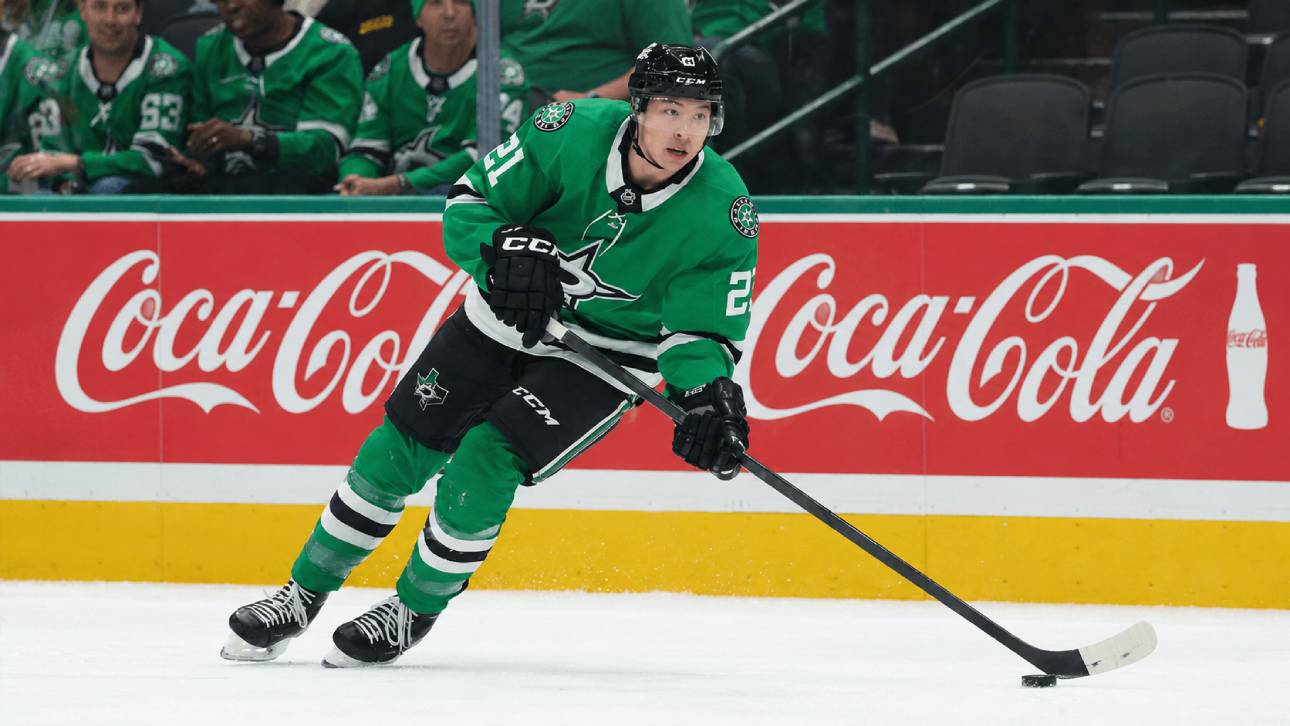
The Dallas Stars did not secure Jason Robertson’s future when they signed him to a one-year, $12 million contract. They bought themselves one more season to figure it out.
Robertson will remain in Dallas for the 2026-27 NHL season, avoiding arbitration while matching Mikko Rantanen as the highest-paid player on the Stars. However, the agreement also carries Robertson directly toward unrestricted free agency in the summer of 2027. That makes this one of the most important contracts, and potentially one of the most dangerous contracts, in franchise history.
My expectation is that Dallas will keep Robertson through at least the first half of the season, make the necessary moves to become salary-cap compliant and reopen serious extension negotiations on January 1. If Robertson is unwilling to commit by the middle of the season, general manager Jim Nill will have to explore a trade rather than risk losing an elite goal scorer for nothing.
This agreement resolves the immediate contract dispute. It does not resolve the long-term Jason Robertson question.
Jason Robertson’s One-Year Contract Changes Everything for Dallas
Jason Robertson Career NHL Stats

Jason Robertson

| Type | GP | G | A | P | +/- |
|---|---|---|---|---|---|
| Regular Season | 465 | 216 | 283 | 499 | +121 |
| Playoffs | 62 | 23 | 29 | 52 | -6 |
Robertson earned his raise by producing 45 goals and 51 assists for a team-leading 96 points in 82 games last season. It was his third 40-goal campaign, and he was voted the NHL’s First Team All-Star at left wing. He has also accumulated 490 points in 456 career regular-season games, establishing himself as one of the league’s most consistent offensive wingers.
Nill described Robertson as a “cornerstone of our franchise,” which is an important choice of words. Dallas still views Robertson as part of its core, but the organization has already demonstrated that it will consider moving him if the contractual and financial pieces do not fit.
The Stars had a potential sign-and-trade framework with the Seattle Kraken before the 2026 NHL Draft. Seattle reportedly offered Robertson approximately $120 million over eight years, but he would not agree to the long-term contract. The proposed trade, believed to include the seventh-overall selection, consequently fell apart.
That development suggests money alone may not determine where Robertson signs. Location, organizational direction, roster quality and Robertson’s ability to control his future could all become significant factors.
Dallas Must Fix Its Immediate Salary-Cap Problem
The first job for Nill is becoming cap compliant.
Following the Robertson signing, PuckPedia projects the Dallas Stars at a cap hit of approximately $105.36 million against the NHL’s $104 million ceiling. That puts Dallas roughly $1.36 million over the cap with a projected 22-player roster.
Based on our calculation, assigning one player with a $1 million cap hit to the minors would not be enough. Dallas would still sit approximately $360,000 over the ceiling. Removing two depth contracts carrying cap hits of $1 million and $875,000 would create only about $515,000 in room while potentially forcing the Stars to carry a thin roster.
Trading a contract worth approximately $1.5 million would technically make Dallas compliant, but it would leave the team with less than $140,000 in breathing room. That is not enough flexibility to comfortably handle injuries and roster recalls.
Tyler Seguin’s health could offer another solution. PuckPedia currently lists Seguin with a knee injury and a $9.85 million cap hit. If he is unavailable and qualifies for long-term injured reserve, Dallas could use LTIR to manage its opening roster. The Stars would still prefer a cleaner solution because operating in LTIR can restrict flexibility later in the season.
January 1 Becomes the Real Jason Robertson Deadline
Because Robertson signed a one-year contract, the Stars cannot sign him to another extension until January 1, 2027. The NHL’s new collective bargaining rules will also limit same-team extensions to seven years rather than eight.
That date will tell us considerably more about Robertson’s future than this one-year agreement does.
Dallas is projected to have approximately $41.16 million in cap space for 2027-28, although only 13 players are currently under contract. Seguin’s $9.85 million deal is also scheduled to expire, creating room that could be redirected toward Robertson.
The Stars can therefore afford a long-term contract in isolation. The difficult part is building a complete championship roster around Robertson, Rantanen, Thomas Harley, Roope Hintz, Wyatt Johnston, Miro Heiskanen and Jake Oettinger.
I expect Dallas to eventually offer Robertson a seven-year extension worth somewhere between $13.5 million and $14.5 million per season. That would recognize his elite production while keeping him below the reported $15 million offer he rejected from Seattle.
A Jason Robertson Trade Can No Longer Be Dismissed
Dallas should not rush into a trade before training camp. This remains a team capable of challenging for the Stanley Cup, and removing a 45-goal winger would make the roster considerably less dangerous.
The situation changes if Robertson rejects Dallas’ best offer after January 1.
At that point, Nill would need to determine whether one final playoff run is worth the possibility of losing Robertson without receiving an asset in return. In my view, the Stars cannot accept that risk unless they believe they are the clear Stanley Cup favourite.
Robertson’s trade value would also depend heavily on whether an acquiring team could negotiate an extension. A team is unlikely to surrender multiple premium assets for a player who could leave several months later.
Dallas should demand an NHL-ready top-six forward, a high-end young player and meaningful draft capital. A futures-only package would not make sense for a team built to contend now.
My current forecast is a 50 percent chance Robertson signs an extension with Dallas, a 35 percent chance he is traded before the 2027 deadline and a 15 percent chance the Stars keep him for the playoffs without a new contract.
The Stars Have Time, but They Do Not Have Security
The one-year agreement allows Dallas to bring back its leading scorer without immediately dismantling the roster. It also gives Robertson the opportunity to prove that his 96-point season was not his ceiling before potentially entering the open market.
That is an excellent outcome for Robertson. It is a much more uncomfortable outcome for the Stars.
Dallas now has several months to sell Robertson on its championship window, create a sustainable salary structure and establish what his next contract should look like. If those efforts fail, Nill must act decisively.
The worst possible outcome would be waiting until July 2027 and watching one of the organization’s best homegrown players leave without compensation.
Find the Latest Dallas Stars News and NHL Trade Rumors
For the latest Dallas Stars news, Jason Robertson updates, NHL trade rumors and fantasy hockey predictions, add nhltraderumor.com to your bookmarks. While you’re here, don’t forget to join our official NHL Hockey Pool this season to test your GM skills and compete for the ultimate bragging rights. You can also find out how to watch the Stars game on TV today on our website and sign up for our newsletter below.
Enjoying our trade coverage? Add us as a preferred source on Google to catch breaking rumors first.